
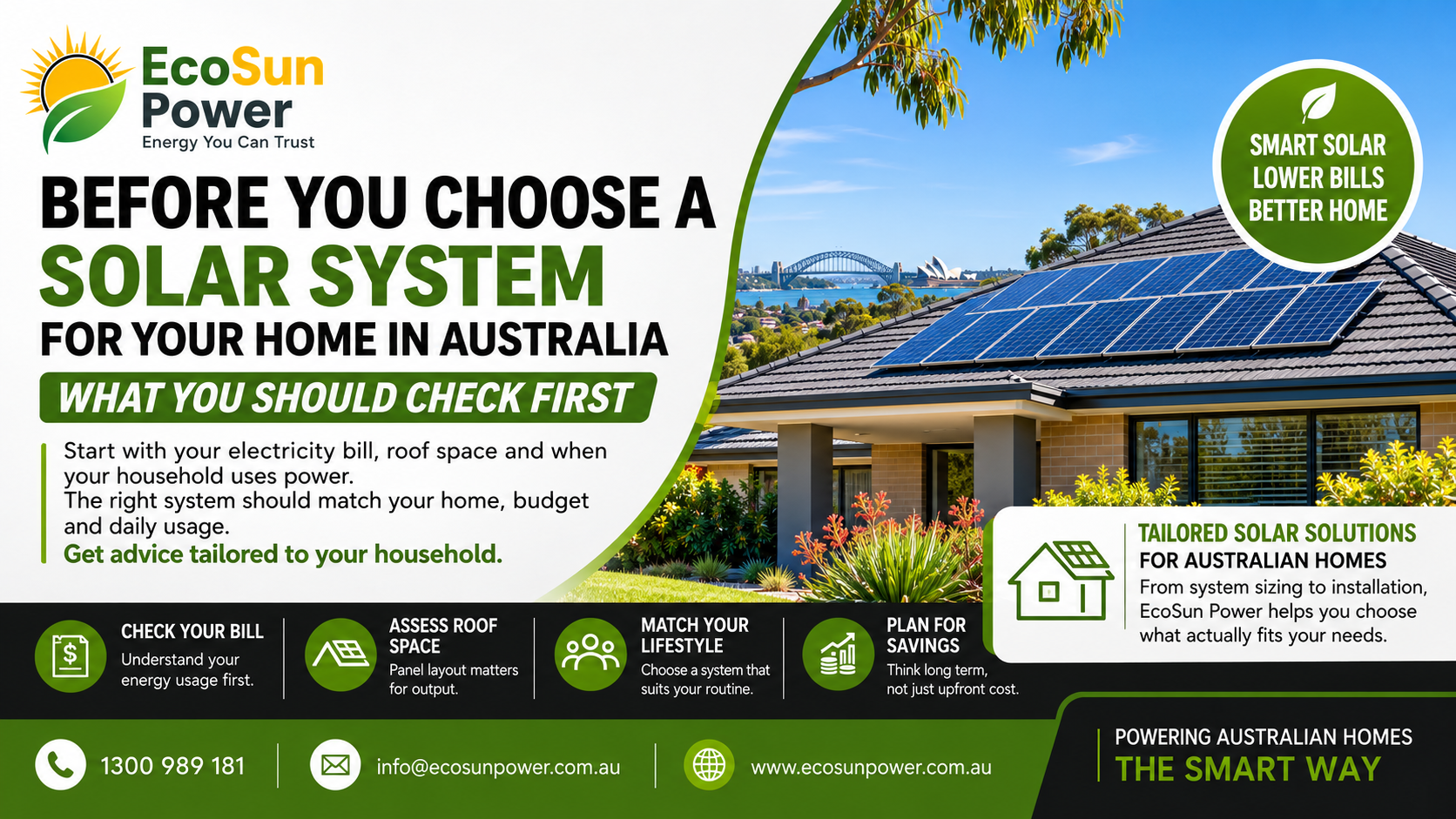
Your electricity bill tells you more than how much power your household uses. It can show when you use the most energy, how your costs change through the year and whether solar could help reduce the amount of electricity you buy from the grid.
Choosing a solar system is not simply a matter of buying the biggest package or the panels with the highest advertised output. The right setup depends on your home, your roof, your daily routine and your future energy needs.
A system designed around these details is more likely to deliver useful savings over its working life.
Before comparing quotes, take time to understand the factors that shape a good solar design. This guide explains what Australian homeowners should check before choosing a residential solar system.
1. Start With Your Electricity Bill
Your recent electricity bills are the best starting point for a solar assessment. Look for average daily electricity use, usually shown in kilowatt-hours (kWh), and compare bills from different seasons.
Air conditioning, heating, pool pumps and other appliances can make summer and winter consumption very different.
Also check when your household uses electricity. If people are home during the day, appliances may use solar power as it is generated. If most of your energy use happens in the evening, you may export more daytime electricity and buy power from the grid later.
If your property has a smart meter, interval data can provide a more detailed picture of usage across the day.
Share recent bills or interval data with your installer so the proposed system reflects your actual consumption rather than a generic household average.
2. Check Your Roof Space, Direction and Shade
The roof determines how many panels can fit and how much sunlight they can receive. An installer should assess usable roof area, roof condition, pitch, orientation and access before recommending a system.
In Australia, north-facing roof sections often receive strong sunlight across the day. East-facing panels can produce more energy in the morning, while west-facing panels can help cover afternoon demand.
The best layout depends on when your household needs electricity, not just the highest possible daily generation.
Look for shade from trees, nearby buildings, chimneys, antennas and other roof features. Even partial shading can affect output, depending on the system design and equipment.
If your roof needs repairs or replacement soon, discuss that before installation. Removing and reinstalling panels later can add cost.
Ask the installer to explain the proposed panel layout and any shading assumptions used in the performance estimate.
3. Choose a Solar System Size That Matches Your Home
Solar system capacity is measured in kilowatts (kW). The right capacity depends on your electricity use, when power is used, sunny roof area, shading, local conditions and budget.
A larger system is not automatically the best choice.
A system that is too small may leave you buying substantial electricity from the grid. A system that is too large may export more electricity than you can use, and the value of exported power can be lower than the retail price you pay to import electricity.
Ask for an explanation of the recommended panel capacity and inverter size.
In many Australian installations, the panel capacity is larger than the inverter capacity. This is known as panel oversizing, but the design must comply with equipment requirements and applicable scheme rules.
Your future plans matter too. An electric vehicle, a pool, electric hot water, induction cooking, home extensions or increased air-conditioning use may raise demand.
Tell your installer what changes you expect over the next few years.
4. Understand Solar Panels, Inverters and System Quality
Solar panels convert sunlight into direct-current electricity. The inverter converts that electricity into alternating current used by household appliances and the grid.
Both components affect system performance, reliability and monitoring.
When comparing products, look beyond headline wattage. Ask about product and performance warranties, expected degradation, inverter warranty, monitoring features and the process for handling faults.
Check that the proposed panels and inverter meet current Australian requirements and appear on the relevant approved product lists.
The inverter also needs to suit the panel layout and the electrical characteristics of your property. If your roof has sections facing different directions or experiences shade, ask whether the design accounts for those conditions.
A professional quote should identify the proposed brands and model numbers. Avoid accepting a quote that only describes equipment as premium or Tier 1 without naming the actual products.
5. Decide Whether a Home Solar Battery Makes Sense
A battery stores surplus solar electricity for use later, such as after sunset or during periods when panels are producing less power.
It can increase the amount of solar energy your household uses itself, but it also adds to the upfront cost.
Battery value depends on your evening consumption, electricity tariff, export payment, battery capacity, usable energy, efficiency and installation cost.
Households that use little power at night may not benefit from a large battery. A smaller unit may be more suitable, or a battery may be something to consider later.
Ask your installer to compare the cost and estimated savings of solar-only and solar-plus-battery options. Make sure the estimate explains its assumptions, including how much energy the battery is expected to charge and discharge.
Australian battery incentives and eligibility rules can change. Check current government guidance and ask for the discount, eligibility and final installed price to be shown clearly in writing.
6. Compare the Full Solar Installation Quote, Not Just the Advertised Price
A useful solar quote should show the total installed price and list the equipment, system capacity, inverter, mounting, monitoring and installation work.
It should also identify any extra costs that may apply to your property.
Possible additional work includes switchboard upgrades, meter changes, difficult roof access, longer cable runs, specialised mounting or repairs.
Ask whether these items are included or excluded. A low headline price may not represent the final amount you pay.
Review the estimated annual generation and savings carefully. Ask which electricity tariff and feed-in tariff were used, whether seasonal changes were considered and how much of the generated electricity is expected to be used at home.
Treat savings and payback figures as estimates, not guarantees.
Compare more than one detailed quote where practical. Make sure you are comparing similar system sizes, equipment, warranties and installation scope.
7. Check the Solar Installer and After-Sales Support
Solar equipment is only part of the decision. Installation quality, electrical compliance and support after commissioning also matter.
Check the installer’s relevant accreditation, insurance, experience and customer feedback. Confirm who will carry out the electrical work and who you contact if the system stops performing as expected.
Ask what documentation you will receive after installation. This should include product information, warranties, system design details, commissioning records and instructions for monitoring the system.
Clarify how service requests are handled and whether workmanship is covered separately from manufacturer warranties.
Before signing, read the contract and understand payment stages, cancellation terms, estimated installation timing and what happens if site conditions change.
The Australian Competition and Consumer Commission also recommends researching suppliers, checking agreements and understanding ownership and ongoing obligations.
8. Ask for a Home Solar Assessment Before Choosing
A home solar assessment brings your electricity use, roof conditions and budget together.
It should consider how much energy you use, when you use it, how much suitable roof space is available and whether a battery could suit your routine.
Prepare recent electricity bills and a list of major appliances. Mention any planned electric vehicle purchase, renovation or move away from gas.
Ask the installer to explain the proposed layout, system size, expected generation, export limits and estimated savings in plain language.
EcoSun Power can be your next point of contact for discussing a solar solution for your property.
Visit EcoSun Power to request information and ask about an assessment tailored to your household.
The goal is not to choose a package because it looks impressive on paper. It is to choose a system that fits your home and the way you use electricity.
Frequently Asked Questions About Home Solar in Australia
1. What Size Solar System Does an Australian Home Need?
There is no single size that suits every home. The right capacity depends on daily electricity use, when power is used, sunny roof area, shading, local network limits and budget.
Review your bills and ask an installer to explain the system size recommended for your property.
2. Are North-Facing Solar Panels Always the Best Option?
North-facing panels often receive strong sunlight across the day in Australia. East- or west-facing panels can still be useful, especially when they better match morning or afternoon electricity use.
Roof shade, pitch and household usage should guide the final layout.
3. Do I Need a Battery With My Solar Panels?
No. A battery is optional. It stores surplus solar energy for later use, but its value depends on your evening consumption, electricity tariff, export payment and installed cost.
Compare solar-only and battery options before deciding.
4. How Many Electricity Bills Should I Provide for a Solar Quote?
Provide recent bills covering different seasons if possible. Twelve months of bills or smart-meter interval data can help show seasonal changes and when your household uses electricity.
Ask your installer what information they need for a reliable estimate.
5. How Can I Compare Solar Quotes Fairly?
Compare the total installed price, panel and inverter models, system capacity, estimated generation, warranties, installation scope, exclusions and after-sales support.
Check the assumptions behind savings estimates rather than comparing headline prices alone.
6. Are Government Solar Rebates Available in Australia?
Eligible rooftop solar systems may receive support through the Australian Government’s Small-scale Renewable Energy Scheme.
Battery support is also available under the Cheaper Home Batteries Program, subject to current eligibility and program rules.
Check official government guidance before signing a contract.
7. How Long Does a Home Solar System Last?
Solar panels are designed for long-term use, but performance gradually changes and components have different warranty periods.
Ask for the panel performance warranty, product warranty, inverter warranty and workmanship coverage. Maintenance and site conditions also affect long-term performance.
Conclusion
The right residential solar system starts with your electricity bill, roof space and household routine.
Check your energy use across the day, assess shade and roof condition, choose a suitable system size and compare equipment, warranties and complete installation costs.
Consider a battery only after reviewing how and when your household uses power.
A clear, property-specific assessment can help you avoid paying for a system that does not match your needs.
Speak with EcoSun Power about the options for your home and take the time to understand the design before making a decision.






Comments are closed