
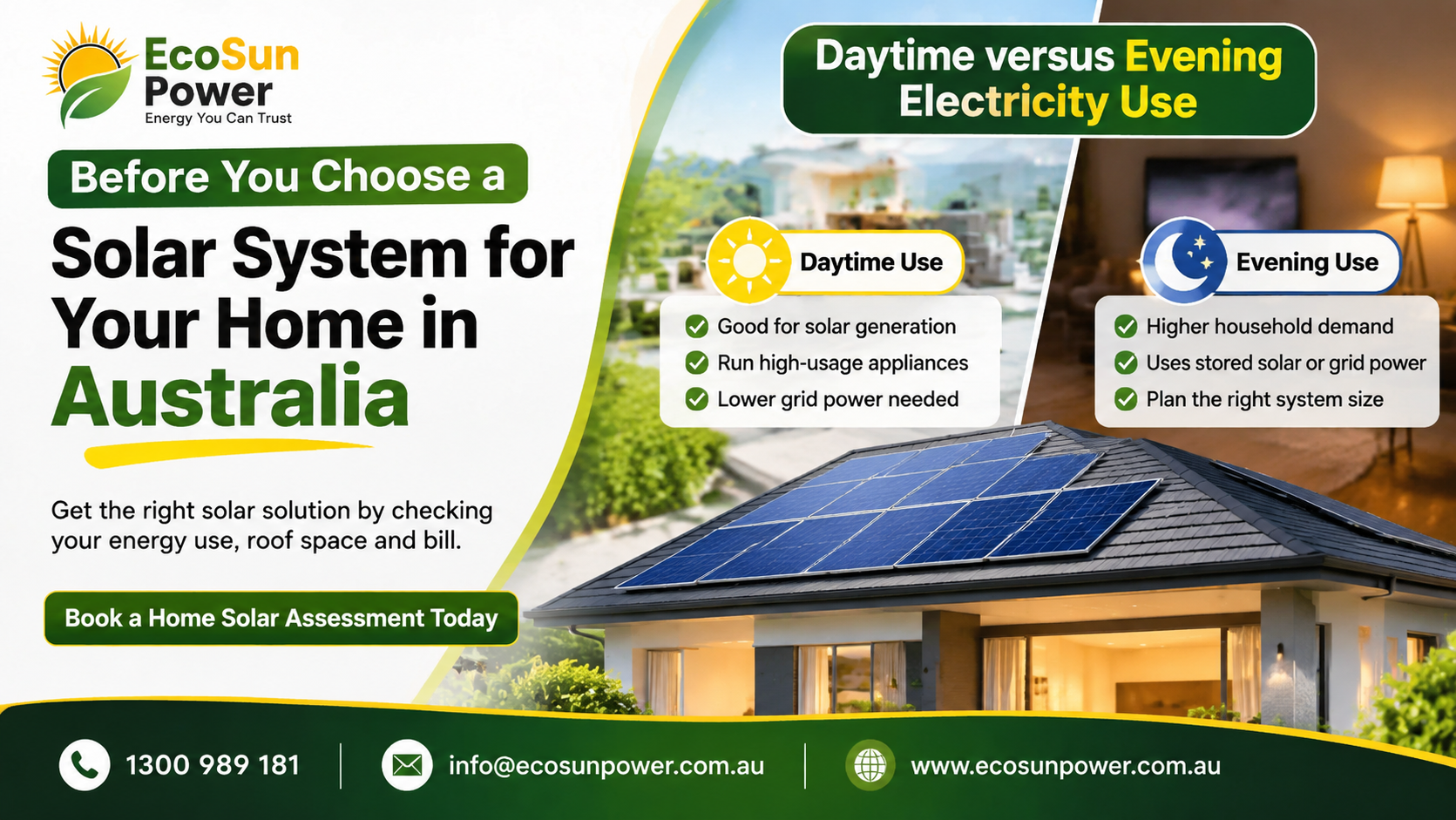
Two Australian households can have similar electricity bills but need very different solar systems. The main difference often comes down to when they use electricity.
One family might run washing machines, dishwashers and air conditioning throughout the day. Another household might remain empty until late afternoon, with most electricity consumption happening after sunset.
Both homes can benefit from solar energy. However, their ideal system sizes, energy usage strategies and battery requirements may be quite different.
Understanding your daytime versus evening electricity use is one of the most important steps before investing in residential solar panels.
If you are considering solar installation in Australia, this guide explains how your daily routine affects system selection and how to get more value from the electricity your panels generate.
1. Why Your Electricity Usage Pattern Matters
Solar panels generate electricity during daylight hours. Production generally increases after sunrise, reaches its strongest levels around the middle of the day and decreases towards sunset.
Your household may not follow the same pattern.
For example, a family working from home could use electricity while solar panels are generating power. A household where everyone works outside may have lower daytime consumption and higher evening demand.
This difference affects how much solar electricity you use directly and how much excess energy you send back to the electricity grid.
Using solar electricity directly can reduce the amount of power you need to purchase from your retailer.
Exporting unused electricity may earn a feed-in credit, depending on your electricity plan. However, feed-in tariffs can be lower than the retail price you pay when purchasing electricity.
That is why understanding your household’s consumption pattern matters before selecting a solar package.
2. How Daytime Electricity Users Benefit From Solar
Homes with regular daytime electricity consumption can make good use of solar generation without relying heavily on battery storage.
Consider a household where someone works remotely or stays home during the day.
Common daytime electricity users include:
- Air conditioning and ceiling fans.
- Washing machines and clothes dryers.
- Dishwashers and kitchen appliances.
- Pool pumps and water heating systems.
- Computers, televisions and home office equipment.
When these appliances operate during strong solar production hours, they can use electricity generated directly by the panels.
This reduces the need to purchase electricity from the grid during those periods.
Homeowners can also consider adjusting appliance schedules. Running the dishwasher, washing machine or pool pump during suitable daylight hours may increase the amount of solar electricity used at home.
The exact benefit depends on system generation, appliance demand, weather and electricity tariffs.
3. What Happens When Most Electricity Is Used in the Evening?
Evening electricity consumption creates a different challenge.
Solar panels produce little or no electricity after sunset. However, household demand can increase significantly during these hours.
Families returning from work may switch on air conditioning, prepare dinner, use televisions and charge electronic devices.
Electric cooking appliances, lighting and hot water systems can also contribute to evening consumption.
Without battery storage, a home with high evening demand may need to purchase more electricity from the grid after solar production stops.
This does not mean solar panels are unsuitable for evening-focused households.
Instead, homeowners should consider how much daytime electricity they can use, whether a battery makes financial sense and how their electricity tariff affects total costs.
A property-specific solar assessment can help compare these options.
4. Should You Choose Solar Panels or Solar Panels With a Battery?
The choice between a solar-only system and a solar-plus-battery setup depends on your energy habits.
A standard solar system generates electricity during daylight hours. Your home uses the available generation first, while surplus electricity may be exported to the grid.
A home battery stores some of that surplus energy for later use.
This can be particularly useful for households that consume more electricity in the evening.
However, batteries increase the upfront installation cost. Their financial value depends on battery capacity, usable energy, efficiency, electricity tariffs, feed-in credits and installation expenses.
Before purchasing a battery, ask your installer to compare two scenarios.
Option 1 – Solar Panels Without a Battery
This option may suit households with substantial daytime electricity consumption. It can also suit homeowners who prefer a lower upfront investment.
Option 2 – Solar Panels With Battery Storage
This option may suit households with higher evening demand. Stored solar energy can help reduce grid electricity purchases after sunset.
Ask for estimated annual savings, expected battery usage and payback assumptions for both options.
A battery should solve a genuine household energy requirement rather than simply increase the size of your solar package.
5. How to Identify Your Household’s Peak Electricity Hours
Before choosing a solar system, understand when your property uses the most electricity.
Start by reviewing your electricity bills. Many Australian households have smart meters that provide interval consumption data.
Depending on your retailer and meter, you may be able to view electricity usage in shorter time intervals throughout the day.
Look for periods when consumption increases.
For example:
Morning: Electric hot water, cooking appliances, lighting and heating may contribute to electricity demand.
Afternoon: Air conditioning, home office equipment, pool pumps and household appliances may increase consumption.
Evening: Cooking, entertainment, lighting, heating and cooling can create higher demand after sunset.
Overnight: Refrigerators, standby appliances, heating, cooling and other continuous loads contribute to electricity use.
Understanding these patterns helps installers recommend a system that reflects your actual requirements.
6. Choose the Right Solar System Size for Your Lifestyle
System sizing should consider more than your average daily electricity consumption.
Two properties using the same number of kilowatt-hours per day may require different solar designs because their consumption occurs at different times.
Your installer should consider:
- Average daily electricity consumption.
- Daytime and evening energy demand.
- Available roof space and orientation.
- Shading and local solar generation conditions.
- Existing and future household appliances.
- Battery requirements and network export limits.
For example, a household with high daytime usage may benefit from a system designed around direct solar consumption.
A household with significant evening demand may need a different approach, including battery storage or changes to appliance schedules.
Do not select a system simply because a neighbour has installed the same capacity.
Your electricity consumption, roof conditions and budget should guide the recommendation.
7. Simple Ways to Use More Solar Electricity During the Day
You do not always need a battery to improve your solar self-consumption.
Small changes to your daily routine can help you use more electricity while panels are generating power.
Try scheduling suitable appliances during daylight hours.
Run washing machines and dishwashers when solar production is strong, where practical. Consider using timers for pool pumps and other appliances with flexible operating schedules.
If your household has an electric hot water system, ask a qualified professional whether its heating schedule can safely align with solar generation.
Smart energy monitoring can also help you understand when your panels produce more electricity than your home needs.
These changes will not suit every household, but they may help reduce unnecessary grid electricity purchases.
8. Get a Residential Solar Quote Based on Your Actual Usage
A standard solar package may not be suitable for every Australian property.
Your household needs a system designed around its electricity consumption, available roof space and future energy requirements.
Before requesting a quote, prepare recent electricity bills and information about your major appliances.
Explain whether your household uses more electricity during the day or evening. Mention any plans to purchase an electric vehicle, install a pool or replace gas appliances.
Ask the installer to explain the proposed system size, expected generation, battery options and estimated savings.
EcoSun Power can be your next point of contact when exploring residential solar options.
Visit EcoSun Power to explore solar solutions and request a property-specific solar quote.
The right solar system should match your lifestyle, not simply the specifications of a standard package.
Frequently Asked Questions
1. Is Solar Power More Beneficial During the Day or Evening?
Solar panels generate electricity during daylight hours. Households that use electricity during these hours can consume more solar energy directly.
Evening-focused households may benefit from battery storage, depending on their electricity consumption and tariff.
2. Do I Need a Solar Battery if I Use More Electricity at Night?
Not necessarily. A battery can store surplus daytime solar energy for evening use, but its financial value depends on installation cost, electricity prices and household consumption.
Compare solar-only and solar-plus-battery quotes before deciding.
3. Can I Run Household Appliances Using Solar Energy During the Day?
Yes. Appliances such as washing machines, dishwashers and pool pumps can use solar electricity when panels are generating enough power.
Actual performance depends on appliance demand, solar generation and other household loads.
4. What Is Solar Self-Consumption?
Solar self-consumption refers to the electricity generated by your solar panels that your household uses directly.
Higher self-consumption can reduce the amount of electricity purchased from the grid.
5. How Can I Check When My Home Uses the Most Electricity?
Review your electricity retailer’s usage portal or smart-meter data. Interval consumption information can help identify morning, afternoon, evening and overnight electricity demand.
6. Is a Bigger Solar System Always Better?
No. The right system size depends on your electricity consumption, roof space, system costs, network requirements and future energy needs.
An oversized system may export more electricity than your household can use, which may reduce its financial value.
7. Can I Save Money Without Installing a Solar Battery?
Yes. You can increase daytime solar consumption by scheduling suitable appliances during solar production hours.
The amount you save depends on your electricity tariff, solar generation and household energy habits.
Conclusion
Your electricity usage pattern should play a major role in choosing a residential solar system.
A household that consumes more power during the day may benefit from direct solar usage. A household with higher evening consumption may want to compare battery storage options.
Before investing, review your electricity bills, understand your peak usage hours and compare solar packages based on your property’s requirements.
Explore residential solar options with EcoSun Power and request a property-specific solar quote to find a system that suits your household.






Comments are closed